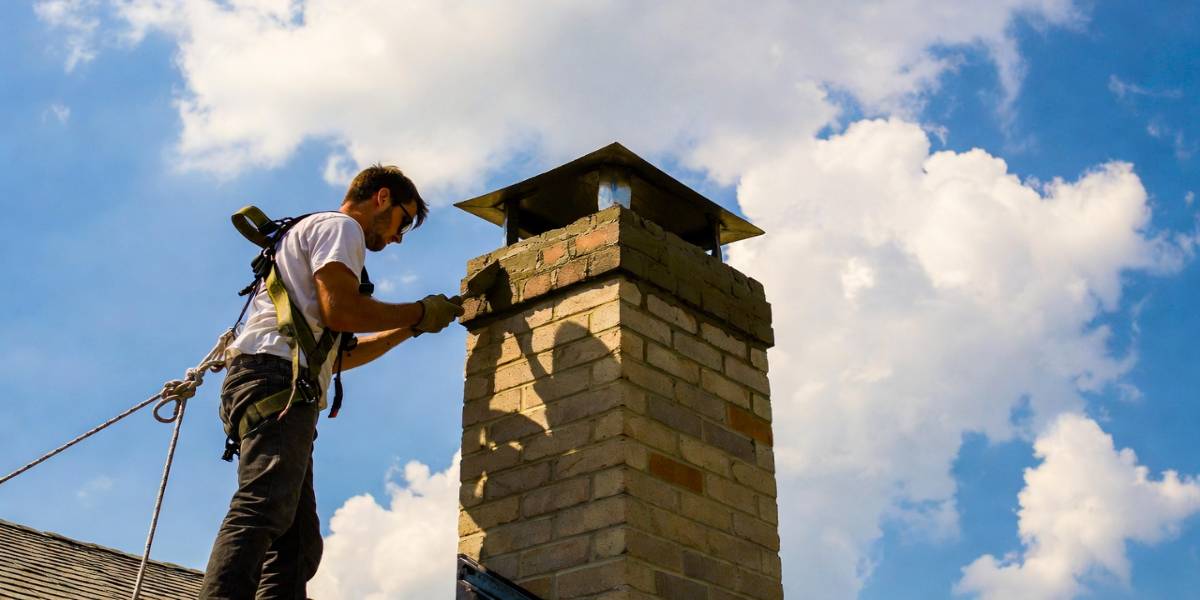
The question every new sweep dreads: what happens when the fireplaces shut off?
Chimney sweeping is one of the most seasonal trades in home services. October through December can account for 40–55% of your annual revenue. The first cold snap triggers a flood of calls. But from January through May? Revenue can drop 50–70%. The phones slow down. The schedule opens up. And if you haven't planned for it, the cash flow gap can break a new business before it ever gets established.
The sweeps who build sustainable businesses — the ones clearing $150K+ as solo operators — don't just survive the off-season. They use it. Here's how.
Revenue Diversification: The Services That Fill the Gap
Dryer Vent Cleaning
This is the most natural add-on service for a chimney sweep, and it's one of the most profitable services you can offer year-round.
The pitch is simple: you already own the brushes, rods, and vacuum. You already have the truck and the customer base. Dryer vent cleaning uses overlapping equipment and skills, costs $100–$250 per job, takes 30–60 minutes, and has demand that doesn't follow the fireplace season.
The dryer vent opportunity:
- ~15,970 dryer fires per year in the U.S.
- 92% of laundry fires involve dryers
- Leading cause: failure to clean (lint buildup)
- $200+ million in annual property damage
- A clogged vent costs homeowners $100–$200/year in extra energy costs alone
- Cleaning revenue: $100–$250 per job at 70–80% margins
The CSIA offers a Certified Dryer Exhaust Technician (C-DET) credential — the only certification specifically for dryer vent professionals, recognized in all 50 states. Adding C-DET to your CSIA certification positions you as the expert for both chimney and dryer vent services.
Marketing it is easy: "While I'm here for your chimney, would you like me to clean your dryer vent? Lint buildup is a leading cause of house fires." That one sentence at the end of every chimney appointment generates dryer vent bookings throughout the year.
Masonry Repairs
Spring and summer are ideal for masonry work — and if you've been doing inspections all fall and winter, you've been documenting the deficiencies that need repair. This is the deficiency pipeline in action:
- Tuckpointing/repointing: $500–$3,000 per chimney, depending on extent of deterioration.
- Crown repair: $150–$600 for patching, $700–$1,500 for a full rebuild.
- Waterproofing: $150–$800 per chimney.
- Flashing repair: $200–$700.
- Partial chimney rebuild (above roofline): $1,000–$5,000.
The customers you documented deficiencies for in October and November are your spring masonry clients. A targeted email campaign — "Spring is the ideal time for masonry repairs. Here's what we found at your last inspection" — can fill weeks of the schedule with high-ticket repair work.
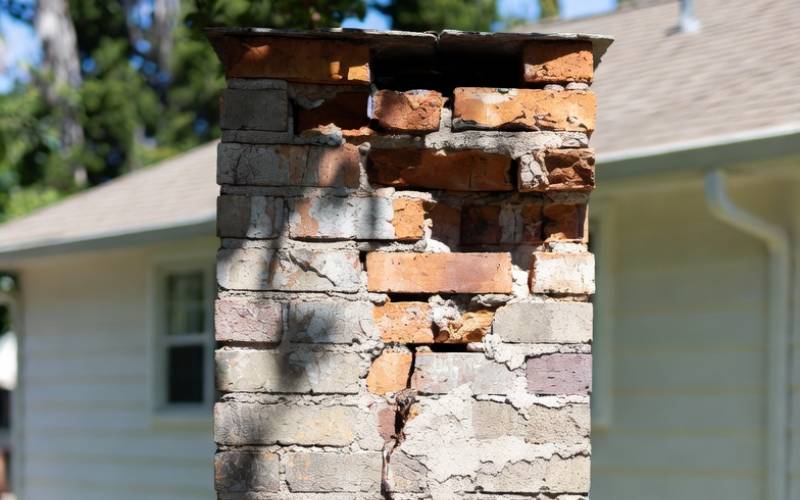
The spring outreach play: Filter your customer database by deficiency type. Everyone with crown damage gets a crown repair email. Everyone with mortar deterioration gets a tuckpointing email. Everyone with missing waterproofing gets a waterproofing email. Personalized outreach based on documented findings closes at significantly higher rates than generic "spring special" campaigns.
Gas Appliance Servicing
Gas fireplaces, gas inserts, and gas log sets need annual servicing — and that service is less seasonal than wood-burning chimney work. Gas appliance maintenance includes cleaning burners, checking ignition systems, inspecting glass and gaskets, testing safety controls, and cleaning pilot assemblies.
Gas appliance cleaning typically runs $80–$200, and the demand stretches across the calendar because gas appliances are used year-round in many climates. Adding NFI Gas Specialist certification to your credentials opens this revenue stream and adds another professional differentiator.
Liner Installations
Stainless steel liner installations are one of the highest-ticket services a chimney sweep can offer — $625 to $7,000 depending on flue size, length, and liner type. Spring and summer are ideal installation windows because:
- Customers aren't using their fireplaces, so there's no urgency to finish quickly.
- Weather is cooperative for roof access.
- You have the schedule flexibility for full-day or multi-day jobs.
If you identified cracked flue tiles during fall inspections and recommended lining, spring is when those jobs convert. Follow up with the customer, remind them of the camera footage showing the damage, and schedule the installation.
Chimney Cap and Accessory Sales
Caps, damper replacements, and spark screens are quick-install, moderate-ticket items ($150–$1,500) that can be sold and installed year-round. Keep popular sizes in stock on your truck so you can install same-day when you find a missing or damaged cap during any service call.
The Training Investment Window
The off-season isn't just about revenue. It's the best time to invest in yourself and your business.
| Investment | Cost | What It Opens |
|---|---|---|
| CSIA CCS certification (if not yet certified) | $500 – $800 | Baseline professional credibility |
| C-DET certification | $300 – $500 | Dryer vent service revenue stream |
| NFI Gas Specialist | $400 – $600 | Gas appliance servicing revenue |
| NFI Wood Specialist | $400 – $600 | Wood stove install/service expertise |
| NCSG Convention attendance | $500 – $1,500 (with travel) | Networking, vendor deals, CEUs, industry knowledge |
| CSIA continuing education | $100 – $300 | Certification renewal, skill development |
The NCSG holds two annual conferences — the Convention in spring and the Chimney Expo in August. Both offer technical sessions, business workshops, vendor exhibitions, and networking with peers. For a new sweep, attending one of these events is one of the highest-ROI investments you can make. The knowledge, relationships, and vendor deals you pick up in three days can shape the next year of your business.
The certification compound effect. Each certification doesn't just add a credential to your wall — it opens a revenue stream. CSIA CCS opens chimney cleaning and inspection revenue. C-DET adds dryer vents. NFI Gas adds gas appliance servicing. NFI Wood adds stove installation expertise. A sweep with all four certifications can serve virtually any residential combustion or venting system, filling the schedule year-round with diversified services.
Equipment and Truck Maintenance
The off-season is when you service your own equipment — the tools that service your customers:
- Vehicle: Oil change, tire rotation, brake inspection, transmission service. Budget $2,000–$4,000/year.
- HEPA vacuum: Deep clean, filter replacement, motor inspection. This is your most important tool — if it fails on a job, you can't work.
- Brushes and rods: Replace worn brushes, inspect rod connections for cracks. $200–$500/year.
- Camera equipment: Clean lens assemblies, inspect cables, update software. Repair or replace as needed.
- Ladders: Inspect for damage, replace worn feet, verify compliance with OSHA guidelines.
- PPE: Replace respirator filters, check harness expiration dates. Fall protection equipment has a limited service life — don't stretch it.
Doing this maintenance during the slow season means you start the fall rush with everything in peak condition. Discovering that your camera cable is frayed on your first job of October is a disaster. Discovering it in March gives you time to repair or replace without losing revenue.
Business System Improvements
When you're running 4–5 jobs a day during peak season, you don't have time to improve your systems. The off-season is when you:
- Update your website. Add new photos, update testimonials, optimize for search terms.
- Evaluate software. If your scheduling, invoicing, or inspection documentation systems aren't working, now is the time to switch.
- Build templates. Standardize your inspection report format, estimate templates, and follow-up email sequences.
- Organize customer data. Clean up your CRM. Make sure every customer has accurate contact info and service history. Set up annual reminder automations.
- Review financials. Run your numbers from the previous season. Which services were most profitable? Which marketing channels generated the most leads? Where did you lose money?
- Plan the fall campaign. July is when you start booking September. Your marketing materials, email campaigns, and social content for the fall rush should be planned and ready before August.
The Off-Season Revenue Scenario
Here's what a realistic off-season month (March) can look like for an established solo sweep who's diversified their services:
| Service | Jobs | Avg. Revenue | Monthly Total |
|---|---|---|---|
| Dryer vent cleaning | 12 | $175 | $2,100 |
| Masonry repairs | 4 | $1,200 | $4,800 |
| Gas appliance service | 8 | $125 | $1,000 |
| Cap/damper installs | 5 | $400 | $2,000 |
| Chimney cleanings (early bird) | 6 | $250 | $1,500 |
| Level 2 inspections (real estate) | 3 | $450 | $1,350 |
| Total March revenue | 38 jobs | $12,750 |
That's not peak-season revenue. But it's $12,750 in a month when many cleaning-only sweeps are making close to nothing. Over the Q1–Q2 slow period (January through June), a diversified sweep can generate $50,000–$80,000 while a cleaning-only sweep might hit $15,000–$25,000.
Real estate inspections are year-round. Homes sell in every month. Level 2 inspections for real estate transactions are one of the few chimney services with consistent year-round demand. If you've built those realtor relationships (see our marketing article), you have a baseline of Level 2 inspection work that doesn't follow the season.
The Mindset Shift
The sweeps who struggle with the off-season are the ones who think of themselves as chimney cleaners. They clean chimneys from September to December, and then they wait.
The sweeps who thrive year-round think of themselves as home safety and venting professionals. They inspect, maintain, and repair every combustion appliance and venting system in a home — chimneys, dryer vents, gas appliances, flues, crowns, caps, liners, and masonry. They document deficiencies in the fall and convert them to repair revenue in the spring. They add certifications that open new service lines. They invest in their business systems when the schedule allows.
The off-season isn't downtime. It's the infrastructure investment period that makes the next peak season bigger, smoother, and more profitable than the last one.
Speaking of converting inspections to revenue...
The deficiency pipeline is the engine that separates $80K businesses from $200K businesses. Next up: how to ethically turn inspection findings into booked repair work.
Next: From Inspection to Repair Revenue →