
There's a number that defines the trajectory of every chimney sweep business: the percentage of inspection findings that convert to booked repair work.
A sweep who cleans 400 chimneys a year at $250 each grosses $100,000. That's the ceiling. That's all cleaning can do. But if that same sweep identifies deficiencies on 60% of those jobs — which is realistic for aging housing stock — and converts even 30% of those findings into repair work averaging $800, that's an additional $57,600 in revenue. From the same customers. On the same jobs. With the same truck.
This is why the industry data is so clear: cleaning-only businesses plateau at $80,000–$120,000. Businesses that develop repair and installation capabilities reach $150,000–$250,000+ as solo operations. The gap isn't about working harder. It's about capturing the revenue that the inspection naturally creates.
The Cleaning-Only Plateau
Here's the math that limits a cleaning-focused operation:
The cleaning ceiling:
- Solo operator, highly efficient: 3–5 cleanings per day
- Realistic average with drive time, setup, and customer interaction: 3–4 per day
- Working days per year (accounting for weather, holidays, slow season): ~200
- Maximum cleanings per year: 600–800
- At $200–$350 per cleaning: $120,000–$280,000 gross
- After expenses (vehicle, insurance, equipment, marketing): $60,000–$140,000 take-home
That ceiling exists because there are only so many hours in a day, only so many days in a season, and only so much a customer will pay for a cleaning. You can optimize — tighter routing, faster setup, higher prices — but you're optimizing within a box. The box has walls.
Repair revenue breaks through the walls. A single liner installation ($2,500) equals the revenue of 10 cleanings. A crown rebuild ($1,000) equals 4 cleanings. A waterproofing job ($350) plus a cap install ($300) on the same chimney equals the revenue of almost 3 cleanings — and you're already on-site.
The Deficiency Pipeline
Top-performing sweeps don't "upsell." They document. The deficiency pipeline is a systematic approach that converts inspection findings into repair revenue through transparency, not pressure.
Step 1: Document Every Deficiency During the Inspection
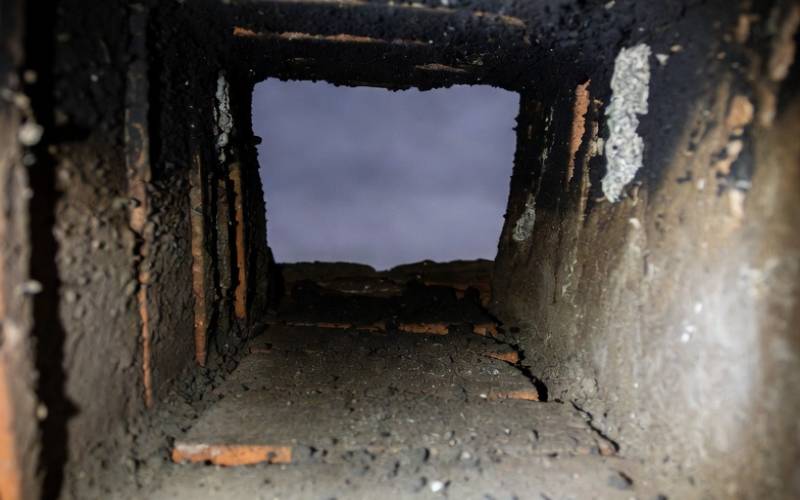
Every cleaning visit includes a visual inspection. Every visual inspection reveals conditions. Your job is to document all of them — not just the critical ones:
- Take photos and video of every issue found.
- Note severity: safety hazard, functional concern, or maintenance/cosmetic item.
- Record measurements and specifics needed for accurate estimation.
- Use your chimney camera to capture internal conditions.
The most common findings during routine cleanings:
| Finding | Frequency | Typical Repair Revenue |
|---|---|---|
| Missing or damaged chimney cap | Very common | $150 – $500 |
| Cracked or deteriorated crown | Common | $150 – $1,500 |
| Deteriorated mortar joints | Common | $500 – $3,000 |
| No waterproofing (efflorescence visible) | Very common | $150 – $800 |
| Damper not sealing properly | Common | $200 – $1,500 |
| Cracked flue tiles | Moderate | $625 – $7,000 (lining) |
| Flashing deterioration | Common | $200 – $700 |
| Firebox damage (cracked firebrick/panels) | Moderate | $300 – $800 |
| Smoke chamber needs parging | Less common | $1,000 – $2,000 |
Step 2: Present Findings On-Site
This is where documentation becomes revenue — and where the line between professional service and aggressive selling gets drawn.
The approach that works:
- Walk the customer through photos on your tablet. Let them see the damage themselves. "Show, don't tell" is the most powerful principle in chimney sales.
- Explain each issue in plain language. Not "the chimney needs repointing" — say "the mortar between the bricks is crumbling. Water gets in, freezes, and pushes the bricks apart. Over time, this compromises the structure."
- Prioritize by safety. "This needs to be addressed before you use the fireplace again" is fundamentally different from "this should be done in the next year or two." Customers respect honest prioritization.
- Let the camera do the selling. When a customer sees their cracked flue tile on a 10-inch screen, you don't need a pitch. The evidence speaks.
The trust problem is real. The chimney industry has a documented scam problem. Homeowners have seen the news reports about fly-by-night operators inventing deficiencies to sell unnecessary repairs. They are primed to be skeptical. Your documentation — photos, video, written reports — is what separates you from the scammers. "Don't take my word for it — look at the camera footage" is the most powerful sentence in the trade.
Step 3: Provide a Written Estimate
Two approaches, depending on the scope:
On-site estimates for smaller items ($200–$600): Cap installation, waterproofing, minor crown repair. Present pricing immediately while the customer is engaged. On-site closures for small repairs run 40–60%.
Follow-up estimates for larger repairs ($600+): Liner installation, chimney rebuild, extensive masonry work. Send a detailed written estimate within 24–48 hours. Include the photos from the inspection to remind the customer of the need. Follow-up estimates typically close at 20–35%.
The estimate that closes: Include photos in the estimate document. A written estimate that says "$2,500 for a stainless steel liner" is abstract. An estimate that shows the cracked flue tile, explains the fire risk, describes the liner solution, and shows what the finished installation looks like — that closes. Top operators report 50%+ overall conversion from deficiency finding to booked repair.
Step 4: Follow Up Systematically
Most repair revenue isn't lost because the customer says "no." It's lost because nobody follows up after the initial presentation.
| Timing | Method | Message |
|---|---|---|
| Same day | Send inspection report with photos and findings | |
| 48 hours | Phone/text | "Did you have any questions about the findings?" |
| 1 week | Resend estimate with gentle reminder | |
| 30 days | Email/postcard | "Just checking in — ready to schedule those repairs?" |
| Spring | Email campaign | "Spring is ideal for masonry work. Your estimate is still valid." |
That spring follow-up is critical. Many customers who decline repairs in October — when they're focused on just getting the chimney cleaned before Thanksgiving — are receptive in March when they have time and budget to address the issue. Software that can filter customers by deficiency type makes this targeted outreach easy and effective.
Step 5: Seasonal Remarketing
The deficiency pipeline doesn't reset each season. Unfixed deficiencies carry forward. The crown that was cracked last October is still cracked this March — and it's gotten worse over the winter. A targeted email campaign to all customers with outstanding masonry deficiencies — "Your chimney's crown damage is worsening with each freeze-thaw cycle. Spring is the ideal time for repair." — converts customers who weren't ready six months ago.
The Revenue Stack: What Full-Service Looks Like
Here's how the revenue breakdown shifts when a sweep moves from cleaning-focused to full-service:
| Service Category | Cleaning-Focused | Full-Service |
|---|---|---|
| Cleaning + Level 1 inspection | 60–70% | 25–35% |
| Level 2 inspections | 5–10% | 10–15% |
| Repairs (caps, dampers, crowns, flashing) | 15–25% | 25–35% |
| Major installations (liners, rebuilds) | 5–10% | 15–25% |
| Other (dryer vents, gas appliance service) | 5–10% | 5–10% |
In the cleaning-focused model, you're trading time for money on every job. In the full-service model, each inspection creates a pipeline of higher-ticket work that multiplies the value of every customer relationship.
Profit Margins by Service Type
Not all revenue is created equal. Understanding margins helps you prioritize:
| Service | Gross Margin | Why |
|---|---|---|
| Cleaning + Level 1 inspection | 70–80% | Low material cost, mostly labor |
| Level 2 inspection | 75–85% | Camera investment amortized over many jobs |
| Cap installation | 50–60% | Significant material cost |
| Waterproofing | 60–70% | Material + labor |
| Crown repair | 55–65% | Material + labor |
| Tuckpointing | 50–65% | Labor-intensive |
| Liner installation | 40–55% | High material cost, significant labor |
| Chimney rebuild | 35–50% | Highest material and labor cost |
Cleanings and inspections have the highest margins, but the lowest ticket. Liner installations have lower margins, but a single job generates the revenue of 10+ cleanings. The optimal business model blends high-margin recurring work (cleanings) with high-ticket project work (repairs and installations).
The Ethics of Upselling
Let's address this directly, because the scam problem in the chimney industry makes this conversation necessary.
There is a fundamental difference between:
- Documenting a real deficiency and recommending a legitimate repair — this is your professional obligation.
- Inventing or exaggerating deficiencies to sell unnecessary work — this is fraud.
The line is clear, and documentation is what keeps you on the right side of it. When your recommendation is backed by camera footage, timestamped photos, NFPA 211 references, and a written report that the customer can take to any other sweep for a second opinion — you're not upselling. You're doing your job.
The customer's right to decline. A professional sweep presents findings honestly, recommends appropriate repairs, explains the risks of inaction, and respects the customer's decision. If they say "not right now," you document the decline, file the report, and follow up later. You never pressure. You never fear-monger. You never exaggerate. The documented truth is persuasive enough — and if it's not, the customer has made an informed decision, and your documentation protects you either way.
Common Upsell Opportunities During Routine Cleaning
These are the findings that naturally arise during almost every inspection — and the conversation that converts them:
- Chimney cap ($150–$500): "You don't have a cap, which means rain, animals, and debris are getting into your flue. Here's what I recommend."
- Waterproofing ($150–$500): "I noticed white staining on the exterior — that's efflorescence, which means water is penetrating the masonry. Waterproofing prevents further damage."
- Crown repair ($150–$600): "Your crown is cracked. Water gets in through those cracks, freezes, and breaks apart the chimney from the top down."
- Damper upgrade ($400–$700): "Your throat damper doesn't seal well. A top-mount damper seals tight and doubles as a chimney cap."
- Dryer vent cleaning ($100–$250): "While I'm here, would you like me to clean your dryer vent? Lint buildup is a leading cause of house fires."
- Level 2 recommendation ($300–$700): "Your tiles look aged. I'd recommend a Level 2 camera inspection to check for hidden cracks."
None of these conversations feel like sales. They feel like a professional pointing out something the customer didn't know. That's because they are — as long as the finding is real and the recommendation is appropriate.
Customer Lifetime Value: Why This Matters Long-Term
The deficiency pipeline doesn't just increase this year's revenue. It transforms the value of every customer relationship:
Customer lifetime value math:
- Average customer stays 5–8 years with annual reminders
- Annual cleaning revenue: $200–$350/year
- Repair revenue over lifetime: $300–$1,500 (cap, waterproofing, damper, etc.)
- Estimated CLV: $1,500–$4,000 per customer
- Customer Acquisition Cost: $50–$150 (paid channels) or near zero (referrals)
- Target LTV:CAC ratio: 3:1 minimum
A customer who comes in for a $250 cleaning and leaves with a $250 cleaning plus a $300 cap installation has immediately doubled their first-year value. A customer who books a $2,500 liner installation based on your Level 2 findings has generated ten times the value of the original cleaning. And they'll be back next year for another cleaning — and another inspection that may reveal the next repair opportunity.
This is the compound effect. Every inspection builds the pipeline. Every pipeline conversion generates revenue and deepens the customer relationship. Every relationship generates referrals. The business grows from the inside out.
You've got the revenue engine. Now protect it.
Insurance isn't optional in the chimney trade — it's what stands between you and the lawsuit that could end everything. Next up: what coverage you need and what it actually costs.
Next: Insurance for Chimney Sweeps →