
Insurance is not the exciting part of starting a chimney sweep business. Nobody got into this trade because they love reading policy documents. But insurance is the thing that determines whether a bad day ends your business or just costs you a deductible.
You work on rooftops. You work inside people's homes. You handle combustion systems that, if maintained incorrectly, can cause house fires. You drive a work vehicle between job sites. The liability exposure in this trade is real, it's constant, and it's why operating without proper coverage isn't saving money — it's borrowing against a disaster.
The Coverage Stack
Here's every type of coverage a chimney sweep needs, what it protects against, and what it actually costs:
| Coverage Type | Minimum Recommended | Typical Annual Cost | What It Covers |
|---|---|---|---|
| General Liability (CGL) | $1M per occurrence / $2–3M aggregate | $500 – $1,500 | Third-party bodily injury and property damage |
| Professional Liability (E&O) | $1M | $500 – $1,200 | Errors in inspection or professional advice |
| Commercial Auto | $1M combined single limit | $1,200 – $3,000 | Vehicle accidents on the job |
| Workers Compensation | State-mandated minimums | $2,000 – $5,000+ | Employee injuries (required in 49 states) |
| Umbrella/Excess Liability | $1–4M | $300 – $800 | Coverage above primary policy limits |
| Inland Marine/Tools | Varies | $200 – $500 | Tools and equipment in transit or on job sites |
Total annual insurance cost for a solo operator: $2,700 – $7,000 for comprehensive coverage. For a solo sweep without employees, workers comp may not be required (varies by state), bringing the realistic minimum to $2,200 – $5,500.
Breaking Down Each Coverage Type
General Liability (CGL)
This is the foundation of your insurance stack. General liability covers third-party bodily injury and property damage that occurs because of your work.
What it covers:
- A customer trips over your drop cloth and breaks their wrist.
- Your vacuum tips over and scratches a hardwood floor.
- Soot escapes your containment and stains a white carpet.
- A ladder falls and damages the customer's siding.
- A tool drops from the roof and hits a bystander.
What it doesn't cover:
- Your own injuries (that's workers comp).
- Vehicle accidents (that's commercial auto).
- Professional errors in your inspection or advice (that's E&O).
The most common GL claim in the chimney trade is property damage during cleaning — soot on carpet, scratched floors, or damage to the fireplace surround. These are usually small claims ($500–$5,000), but without GL, you're paying out of pocket.
The COI requirement. Many customers, especially commercial clients and property management companies, require a Certificate of Insurance (COI) before allowing you to work. A COI is proof that you carry GL coverage. If you can't produce one on demand, you lose the job. Your insurance agent should be able to generate COIs quickly — same day, ideally within hours.
Professional Liability (Errors & Omissions / E&O)
This is the coverage that protects you when your professional judgment is questioned. In the chimney trade, E&O is not optional — it's critical.
What it covers:
- A chimney fire occurs after your inspection, and the homeowner claims you missed a deficiency.
- A flue you inspected and cleared is later found to have hidden cracks that caused CO leakage.
- Your cleaning is alleged to have been inadequate, contributing to a fire.
- A recommendation you made (or failed to make) is blamed for property damage.
Remember the documentation article? E&O is the policy that your documentation protects. When you have thorough reports, photos, and signed acknowledgments, your E&O carrier can defend you effectively. When you don't, the defense is much harder — and the outcome is much worse.
The $4 million lawsuit. A chimney sweep company was sued for $4 million when a client's property caught fire. The claim: the company failed to provide proper chimney maintenance instructions. E&O is the policy that covers this type of claim. Without it, the company's personal assets — home, savings, everything — would be on the line.
Commercial Auto
Your personal auto insurance does not cover your vehicle when it's being used for business. If you're driving between job sites and cause an accident, your personal policy can deny the claim because you were engaged in commercial activity.
Commercial auto coverage protects you for accidents that happen during business use of your vehicle. It covers:
- At-fault accidents during work drives.
- Damage to your vehicle from road hazards.
- Liability for injuries to others in an accident.
- Damage to other vehicles or property.
At $1,200–$3,000/year, commercial auto is one of the more expensive individual policies. But chimney sweeps drive between job sites all day, every day — the exposure is constant. A single at-fault accident without commercial coverage can result in a denied personal insurance claim and personal liability for all damages.
Workers Compensation
Workers comp covers employee injuries on the job. It's required by law in 49 states (Texas is the only state where it's optional for private employers).
If you're a solo operator with no employees: Most states don't require you to carry workers comp on yourself, but some states do. Check your state's specific requirements. Even when not required, some sweeps carry it voluntarily because:
- It covers your own medical bills if you fall off a roof.
- Some commercial clients require it even from solo operators.
- It demonstrates professionalism and thoroughness to customers.
If you have employees or subcontractors: Workers comp is almost certainly required. Chimney sweeping is classified as high-risk work due to roof access, fall hazards, and respiratory exposure. Premiums reflect that risk — $2,000–$5,000+ per year depending on payroll and state rates.
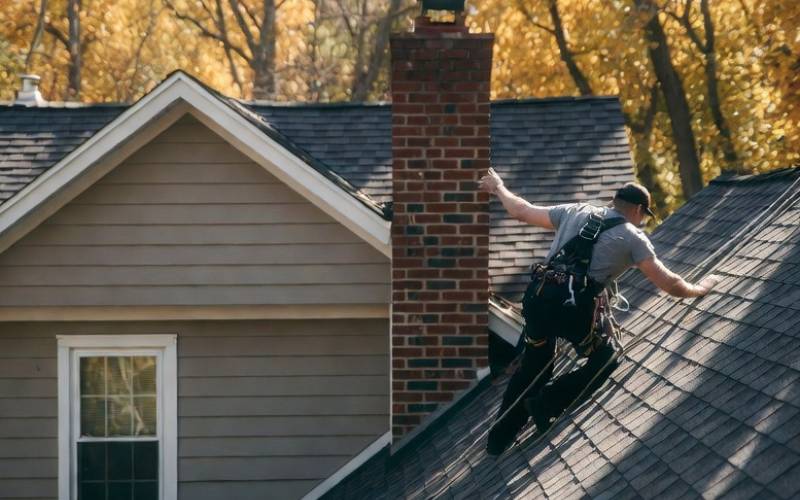
The fall hazard reality. Falls from heights are the most serious and most common injury in the chimney trade. Broken bones, head trauma, and fatal falls happen in this industry. If an employee falls from a roof on your job site and you don't have workers comp, you are personally liable for their medical bills, lost wages, and any legal damages. This can easily reach six or seven figures.
Umbrella / Excess Liability
An umbrella policy extends your coverage limits beyond what your primary GL, E&O, and auto policies provide. If your GL has a $1M per-occurrence limit and a claim exceeds that, the umbrella policy kicks in to cover the difference.
At $300–$800/year for $1–4M in additional coverage, umbrella insurance is one of the best values in the insurance stack. The cost is low because it only activates when primary policies are exhausted — but when it does activate, it can be the difference between a manageable claim and a business-ending one.
Inland Marine / Tools Coverage
This covers your tools and equipment when they're in your vehicle, on a job site, or in transit. A chimney sweep's equipment — camera systems ($600–$2,000), HEPA vacuum ($500–$1,500), ladders, rods, brushes — represents a significant investment. Inland marine covers theft, damage, and loss.
At $200–$500/year, it's affordable insurance against losing $5,000–$15,000 worth of equipment to a van break-in or a job-site accident.
What Happens Without Insurance
Let's be direct about the scenarios that play out when a sweep operates without proper coverage:
| Scenario | Without Insurance | With Insurance |
|---|---|---|
| Soot damages a $3,000 carpet | You pay $3,000 out of pocket | GL covers it minus deductible |
| Chimney fire after your inspection | Personal assets at risk in lawsuit | E&O defends and covers claim |
| Van accident on the way to a job | Personal auto may deny (commercial use); you pay damages | Commercial auto covers it |
| Helper falls off a roof | Personal liability for all medical bills and damages | Workers comp covers medical and lost wages |
| Tools stolen from your van | You replace $5,000+ in equipment out of pocket | Inland marine covers replacement |
| Commercial client requests COI | You lose the job | COI generated same day |
How to Get Insured
Finding an Agent
Look for an independent insurance agent who specializes in — or at least has experience with — contractor and trade insurance. Agents who work with HVAC, plumbing, or general contracting companies understand the chimney trade's risk profile. Avoid generic online quotes from companies that have never insured a chimney sweep — they'll either overprice you or undercover you.
NCSG membership includes access to insurance programs and discounts specifically for chimney industry professionals. This is one of the tangible financial benefits of guild membership.
What You'll Need to Apply
- Business structure (LLC, S-Corp, sole proprietorship).
- Estimated annual revenue.
- Number of employees (if any).
- Services offered (cleaning, inspection, repairs, installations).
- Years in business.
- Certifications held (CSIA, NFI — these can lower premiums).
- Claims history (prior claims increase premiums).
- Vehicle information (year, make, model, mileage).
Reducing Your Premiums
- Get certified. CSIA certification demonstrates professional competency and can lower E&O premiums.
- Maintain a clean claims history. No claims = lower premiums at renewal.
- Document everything. Insurers love policyholders who document thoroughly — it makes claims easier to defend and reduces payouts.
- Bundle policies. Many carriers offer discounts when you bundle GL, E&O, commercial auto, and umbrella into a Business Owner's Policy (BOP).
- Increase your deductible. A higher deductible lowers your premium — but make sure you can afford the deductible if you need to file a claim.
- Safety program. A documented safety program (fall protection protocols, PPE requirements, vehicle maintenance records) can earn premium discounts.
Insurance as a Competitive Advantage
Here's what most new sweeps don't realize: insurance isn't just a cost center. It's a marketing tool.
In an industry plagued by unlicensed, uninsured operators offering $49 cleanings, your insurance coverage is a differentiator. When you can produce a COI on demand, mention your $1M GL coverage in your estimate, and include your policy numbers on your inspection reports — you're demonstrating legitimacy that the fly-by-night operators can't match.
Customers who care about quality — the ones who pay $250 for a cleaning instead of $49 — choose the insured professional. Property managers and commercial clients require it. Realtors and home inspectors refer to insured sweeps because referring to an uninsured operator creates liability for them too.
Insurance costs $2,200–$7,000/year. One good commercial contract, one strong realtor relationship, or one avoided lawsuit pays for it many times over.
The industry is growing. Here's the data.
The chimney trade isn't shrinking — it's evolving. Aging housing stock, rising safety awareness, and insurance requirements are creating more demand for qualified sweeps. Next up: the market opportunity.
Next: The Chimney Industry Is Growing →