You're going to deal with this. Every legitimate chimney sweep does.
You'll show up to a job and the homeowner will eye you with suspicion. You'll find a cracked flue liner — a real safety hazard — and the customer will say, "The last guy told me it was fine." Or worse: "I saw on the news that chimney sweeps make up problems to sell repairs."
That suspicion didn't come from nowhere. The chimney sweep industry has a scam problem, and it affects every operator in the trade — even the ones doing everything right.
How the Scam Works
The most common chimney sweep scam follows a predictable pattern:
- The bait: An ad — often a telemarketing call, a mailer, or an online listing — offers chimney cleaning for $49–$79. Dramatically below market rate (legitimate cleanings run $150–$400).
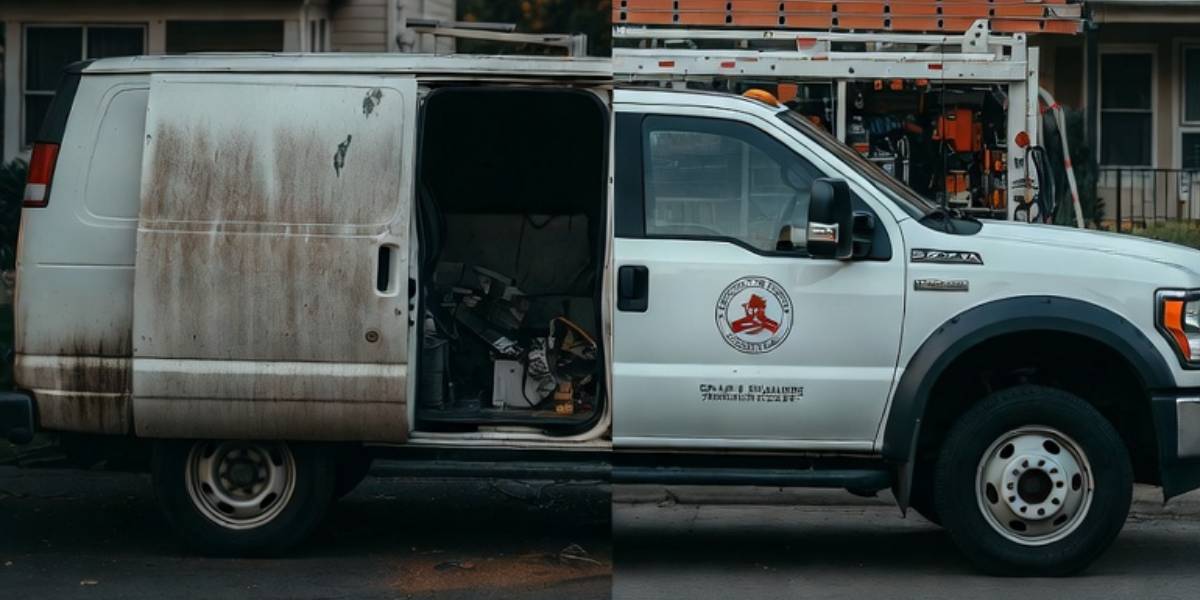
- The arrival: An uncertified, often uninsured "technician" arrives. Sometimes they're a subcontractor who bought a lead from a telemarketing operation. Sometimes they work for a company where only the owner holds a CSIA certification — the actual workers sent to your home have no credentials at all.
- The "inspection": They perform a cursory cleaning or skip it entirely. Then they "discover" serious problems — cracked tiles, carbon monoxide risks, structural failures. Some use pre-recorded camera footage of damaged chimneys to show homeowners problems that don't exist in their chimney.
- The hard sell: High-pressure tactics push the homeowner toward expensive, unnecessary repairs. "Your family is in danger." "You can't use your fireplace tonight." "We can fix it right now for $3,000." The urgency is manufactured. The fear is the product.
- The result: The homeowner either pays for work they don't need, or — increasingly — they refuse and develop a permanent distrust of all chimney professionals. Both outcomes damage the industry.
The media amplifier. ABC News, local investigative reporters, and consumer protection outlets have run multiple exposés on chimney sweep scams. These stories are widely viewed and widely remembered. When a homeowner searches "chimney sweep" before calling you, there's a meaningful chance they've seen one of these reports. The suspicion you encounter isn't personal — it's a rational response to a real problem in your industry.

Why the Problem Persists
Three structural factors keep the scam problem alive:
1. No Licensing Requirement in Most States
The chimney sweep trade is largely unregulated. In most jurisdictions, there's no license required to clean a chimney. Anyone can buy a brush, print business cards, and start taking appointments. There's no barrier to entry, no competency requirement, and no regulatory body revoking licenses when operators behave badly.
Compare this to electricians, plumbers, or HVAC technicians — trades where state licensing, apprenticeship requirements, and continuing education create a floor of competency. Chimney sweeping has no equivalent floor. The CSIA Certified Chimney Sweep credential is voluntary. It's the industry's attempt to self-regulate in the absence of government oversight.
2. Low Barrier to Entry
A budget chimney sweep setup costs $10,000–$25,000. That's low enough for someone with no training and no intention of doing quality work to enter the market. The scam model doesn't require expertise — it requires a uniform, a van, and a script. The "technician" doesn't need to know how to inspect a chimney. They just need to create enough fear to close a sale.
3. Telemarketing and Lead Services
Telemarketing operations sell leads to unqualified contractors. The homeowner receives a call offering a cheap cleaning. The call center routes the lead to whoever will pay for it — often an operator with no certification, no insurance, and no accountability. The call center takes their cut. The operator takes the appointment. The homeowner gets scammed. And a legitimate sweep in the same market loses a potential customer.
The Cost to Legitimate Sweeps
The scam problem doesn't just hurt the homeowners who get ripped off. It creates a trust deficit that every legitimate sweep pays for:
- Price resistance. When scammers offer $49 cleanings, customers develop unrealistic price expectations. A legitimate sweep charging $250 for a proper cleaning with inspection and documentation has to explain why their service costs five times more.
- Findings skepticism. When you find a real deficiency — a cracked flue tile, a deteriorated crown, a missing liner — the customer's first thought may be "is this sweep trying to sell me something I don't need?" The scammers have trained homeowners to distrust the very professionals trying to protect them.
- Reputation damage. Every scam story in the news makes every sweep look bad. The investigative report doesn't say "some chimney sweeps are scammers." The headline says "chimney sweep scams." The entire trade absorbs the reputation hit.
- Lost jobs. Certified sweeps regularly lose jobs to cheaper, uncertified competitors who don't carry insurance, don't provide proper documentation, and don't perform complete inspections. The customer thinks they're getting the same service for less. They're not.
How to Differentiate Yourself
You can't eliminate the scam problem. But you can make it absolutely clear — to every customer, on every job — that you are not part of it. Here's how:
Lead with Credentials
Your CSIA certification number should be on everything: your website, your business card, your vehicle, your inspection reports, your estimates. When a customer can verify your certification on CSIA's directory, you've already cleared a bar that scam operators can't reach.
The CSIA credential progression — Certified Chimney Sweep, Specialist, Master — gives you increasing levels of demonstrable expertise. NFI certifications (Gas, Wood, Pellet) add further differentiation. Each credential is another layer of credibility that a fly-by-night operation can't fake.
Lead with Documentation
The documentation practices that protect you legally also protect you from the scam stigma. When your inspection report includes:
- Timestamped, GPS-tagged photos of every finding.
- Camera footage of the actual flue (not a generic stock video).
- NFPA 211 references for each deficiency.
- Clear severity prioritization (safety vs. functional vs. cosmetic).
- A professional report format with your certification and insurance information.
...you're providing evidence that a scam operator can't produce. The documentation IS the differentiation. A customer looking at a professional report with real photos from their chimney knows this isn't a $49 scam operation.
Show them the camera feed live. Some sweeps bring the customer to the fireplace and let them watch the camera inspection in real-time on a tablet or monitor. When the customer sees their own flue tile cracked on a live camera feed, there's no question about whether the finding is real. They saw it themselves. This single practice — real-time camera sharing — eliminates the "are they making this up?" concern entirely.
Lead with Insurance
Scam operators don't carry insurance — it costs money and creates accountability, both of which they avoid. Mentioning your insurance coverage proactively ("We carry $1M in general liability and professional liability coverage") signals legitimacy. Offering to provide a COI before the appointment starts differentiates you from operators who can't produce one.
Lead with Transparency
The scam model relies on pressure and urgency. Your model should do the opposite:
- Present findings honestly. Show the customer what you found. Explain it in plain language. Let the evidence speak.
- Prioritize clearly. "This is a safety issue that needs attention before you use the fireplace. This other item is maintenance — it can wait until spring." Honest prioritization builds trust.
- Never pressure. "Here's what I recommend. Here's what it costs. Take your time to decide. I'll leave you with the report and photos so you can get a second opinion if you'd like."
- Invite second opinions. A scammer never says "get another estimate." A professional sweep says it routinely — because they know their findings and pricing will hold up to scrutiny.
- Document declines without judgment. If the customer declines a repair, document it professionally and move on. Don't guilt. Don't predict disaster. Just note the decline and ensure they understand the finding.
Educating Your Customers
Part of your job as a legitimate sweep is customer education — helping homeowners distinguish between real professionals and scam operations. You can do this without bashing competitors:
What to tell customers to look for:
- CSIA certification. Ask to see it. Verify it on CSIA's website. A certified sweep can provide their certification number on request.
- Insurance documentation. A legitimate sweep can produce a Certificate of Insurance. An uninsured operator can't.
- Written reports with photos. A proper inspection produces a documented report with photos from your specific chimney. A scam operation produces nothing — or produces generic photos from someone else's chimney.
- No high-pressure tactics. A professional sweep presents findings, makes recommendations, and lets you decide. Anyone pushing for an immediate decision on a major repair is a red flag.
- Realistic pricing. A legitimate chimney cleaning costs $150–$400 depending on your area. A $49 cleaning is either a loss-leader for aggressive upselling or a scam that doesn't include a real cleaning at all.
Industry-Level Solutions
CSIA and NCSG are working to address the scam problem at the industry level:
- Consumer education campaigns that teach homeowners how to verify credentials and identify scams.
- The CSIA directory — a searchable database of certified sweeps that helps consumers find legitimate professionals.
- Advocacy for stronger regulations in states and municipalities that currently have no licensing requirements.
- Industry publications (Sweeping Magazine, The Chimney Sweep News, Blue Collar Magazine) that amplify the message of professionalism.
As a new sweep, joining NCSG and maintaining active CSIA certification puts you on the right side of the industry's effort to self-regulate. Membership benefits include insurance discounts, technical support, networking, and continuing education — but the most important benefit may be association with the organizations that represent the legitimate trade.
The Trust Advantage
Here's the counterintuitive reality: the scam problem is actually an opportunity for sweeps who do things right.
In a market where homeowners are wary of chimney sweeps, the ones who earn trust get rewarded disproportionately. A customer who's been burned by a $49 scam — or who's afraid of being scammed — and then experiences a professional inspection with documentation, transparency, and genuine expertise? That customer becomes a lifelong client. They tell their neighbors. They leave a five-star Google review. They refer their friends.
Trust is the scarcest resource in the chimney trade. The sweeps who build it — through certification, documentation, insurance, and transparent communication — own the market. Because once a customer trusts their sweep, they never go back to searching "chimney sweep near me" and hoping for the best. They call you. Every year. Automatically.
The compound effect of trust. The average customer stays 5–8 years when properly retained with annual reminders. At $200–$350/year for cleaning alone, that's $1,000–$2,800 in recurring revenue. Add repair revenue over the lifetime ($300–$1,500), and a single trusted customer is worth $1,500–$4,000. Multiply that by the referrals they generate, and each trusting relationship becomes the foundation for exponential growth. The scam operators will never build this. They can't. It requires doing the work right, documenting it, and showing up again next year. That's what professionals do.
You've read the full series. Ready to start?
From financial reality to certifications to truck setup to marketing to insurance — this 10-article series covers everything you need to know about entering the chimney trade. The path is clear. The market is open. The tools exist. What happens next is up to you.
Browse all resources →